
Technology
How Malia & Sasha Obama Redefined Digital Privacy
Malia and Sasha Obama mastered digital privacy under unprecedented scrutiny. Their tech-enabled strategies offer lessons for anyone navigating public life online.
AAlex Morgan
12m
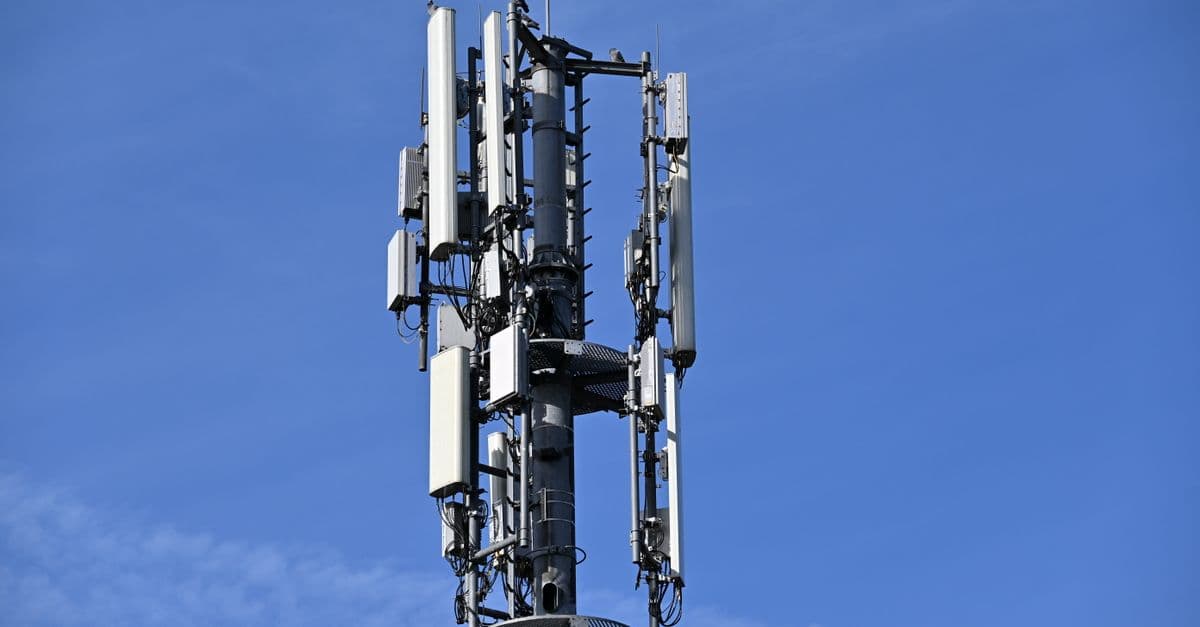
Every time you stream a video or make a call, over 8 million Base Transceiver Stations (BTS) worldwide work silently to keep you connected. These cellular towers are the unsung heroes of wireless communication, yet most people walk past them daily without a second thought. As 5G networks explode across the globe, understanding BTS technology has never been more critical—or more lucrative.
In this comprehensive bts guide, you'll discover how Base Transceiver Stations power modern mobile networks, explore the latest infrastructure developments driving 2.25 billion 5G connections worldwide, and learn why this technology represents a multi-billion dollar market opportunity. Whether you're a tech professional, investor, or simply curious about the infrastructure enabling your digital life, this article will demystify the best bts technologies shaping our connected future.
A base transceiver station (BTS) is a piece of equipment that facilitates wireless communication between user equipment (UE) and a network. Think of it as the critical link between your smartphone and the broader telecommunications infrastructure. When you send a text, download an app, or stream content, your device communicates with the nearest BTS, which then routes your request through the network.
The BTS comprises several key components, including cellular antennas, power transceivers, amplifiers, combiners, multiplexers, alarm extension systems, and other necessary equipment, all typically housed inside a rack that resembles a large server and often includes a backup power system for reliability in case of power failure. These sophisticated systems are deployed at the base of cellular towers or mounted on buildings, working around the clock to maintain seamless connectivity.
Base Transceiver Stations handle multiple critical functions simultaneously. They manage radio transmissions, control signal modulation and demodulation, encrypt communications for security, and coordinate with base station controllers to ensure optimal network performance. The technology has evolved from NodeB (3G), to eNodeB (4G), and gNB (5G) with increasing on-site intelligence and MIMO capability.
Modern BTS units consist of several integrated subsystems working in harmony. The BTS antenna system is usually sectorized (3 sectors at 120 degrees each), with each sector containing its own set of transceivers, filters, and power amplifiers. This sectorized approach allows providers to maximize coverage and capacity within each cell.
In conventional macro base station architectures, the BTS consists of a baseband unit (BBU) and a radio unit (RU). The BBU includes the power source, clock distribution unit, and transmission interface unit, while the RU is tasked with modulation, demodulation, analog-to-digital (A/D) and digital-to-analog (D/A) conversion, signal transceiving, amplification, and filtering of radio signals. This separation of functions allows for more flexible deployment and easier upgrades as technology advances.
The Base Transceiver Station market represents one of the fastest-growing sectors in telecommunications infrastructure. The base transceiver station (bts) market was valued at USD 35.40 billion in 2025, projected to reach USD 38.05 billion in 2026, and is forecast to expand to USD 78.43 billion by 2036 at a 7.5% CAGR. This explosive growth reflects the urgent global demand for enhanced mobile connectivity, particularly as 5G networks continue their rapid expansion.
Annually, more than 1.2 million BTS units are deployed worldwide. This staggering deployment rate demonstrates the scale of infrastructure investment required to meet escalating data demands. The market spans diverse configurations, from massive macro cells covering several kilometers to small cells designed for dense urban environments.
The BTS market shows significant geographic variation in both size and growth trajectory. Regional performance includes Asia-Pacific 35%, North America 30%, Europe 25%, Middle East & Africa 10%. Asia-Pacific leads not only in current market share but also in projected growth rates, driven by massive infrastructure investments in countries like China, India, and Japan.
India witnessed an addition of more than 4,400 new 5G BTS in March 2025. This rapid deployment pace exemplifies the urgency with which developing nations are building next-generation infrastructure. Meanwhile, established markets in North America and Europe focus on upgrading existing installations to 5G-capable equipment rather than building entirely new sites.
| Region | Market Share | Key Drivers | Growth Rate |
|---|---|---|---|
| Asia-Pacific | 35% | Urbanization, 5G expansion, government support | 17-20% CAGR |
| North America | 30% | 5G upgrades, rural coverage expansion | 10-12% CAGR |
| Europe | 25% | Network modernization, Open RAN adoption | 9-11% CAGR |
| Middle East & Africa | 10% | Initial 5G deployment, coverage extension | 15-18% CAGR |
The transition to 5G has fundamentally transformed BTS technology and deployment strategies. 25% of global BTS sites support 5G networks. While this percentage may seem modest, it represents a revolutionary shift in network architecture, with implications for everything from network capacity to energy consumption.
The global wireless telecommunications industry achieved a historic milestone in 2024, with 5G connections reaching 2.25 billion worldwide. 5G has expanded four times faster than 4G LTE did in a comparable period, when LTE had just surpassed 500 million connections at the end of 2014. This unprecedented adoption rate has driven massive investment in BTS infrastructure, with operators racing to capture market share in the 5G era.
5G-capable Base Transceiver Stations incorporate several cutting-edge technologies that distinguish them from earlier generations. Over 50% of new BTS units use small-cell architectures to improve coverage in dense urban areas. These compact installations complement traditional macro cells, creating a more distributed and resilient network topology.
Modern deployments include active antenna systems where the radio and antenna are integrated into a single unit mounted on the tower. This integration reduces installation complexity and improves performance by minimizing signal loss between components. Additionally, massive MIMO (Multiple Input Multiple Output) technology enables 5G BTS to communicate with dozens of devices simultaneously, dramatically increasing network capacity.
The performance improvements are substantial. Peak data transmission capacity ranges from 50 Gbps to 200 Gbps per site. This represents a quantum leap compared to 4G infrastructure, enabling applications like ultra-high-definition streaming, augmented reality, and real-time industrial automation that were previously impractical over mobile networks.
As the global BTS network expands, energy consumption has emerged as a critical concern for both operators and environmental advocates. The telecommunications industry has responded with significant innovations in power efficiency and renewable energy integration.
Energy-efficient BTS units account for 40% of deployments, reducing average power consumption from 3.8 kW to 2.5 kW. This 34% reduction in power consumption translates to substantial operational cost savings and reduced carbon emissions across millions of installations worldwide. For operators managing thousands of sites, these efficiency gains can reduce electricity costs by millions of dollars annually.
The market observes 28% adoption of hybrid energy sources combining solar and diesel generators for off-grid BTS. Over 70% of BTS units use on-grid power sources, and 30% rely on off-grid systems including solar and diesel generators. Off-grid BTS solutions prove particularly valuable in rural and remote areas where grid connectivity is unreliable or unavailable, ensuring network coverage extends to underserved populations.
Modern BTS infrastructure increasingly incorporates intelligent management systems. Remote monitoring systems are now present in 35% of BTS sites, allowing operators to reduce downtime by 30%. These systems use sensors and analytics to predict equipment failures before they occur, dispatch maintenance crews proactively, and optimize network performance in real-time.
Artificial intelligence plays an expanding role in BTS management. AI algorithms analyze traffic patterns, weather conditions, and equipment performance to automatically adjust parameters like transmission power, antenna tilt, and frequency allocation. This dynamic optimization ensures users receive the best bts performance possible while minimizing energy consumption and interference.
While 5G deployment continues at a rapid pace, the telecommunications industry is already planning for the next generation. Several network and technology companies have already started working on 6G solutions. These future networks will require yet another evolution in BTS technology, potentially incorporating even more advanced features like integrated sensing, terahertz frequency operation, and AI-native network design.
The trajectory is clear: Base Transceiver Stations will continue evolving to support ever-higher data rates, lower latency, and greater device density. Forecasts indicate 8.3 billion 5G connections by 2029, representing 59% of all global wireless technologies. This massive expansion will require hundreds of thousands of new BTS installations and upgrades to existing infrastructure worldwide.
Operators in India, China, and Southeast Asia are deploying new BTS infrastructure to extend rural coverage and urban capacity, while European and North American operators focus on upgrading existing sites with 5G-capable radio units. This dual approach—building new infrastructure while modernizing existing assets—will characterize BTS deployment strategies for the remainder of the decade.
Leverage Open RAN architecture: When planning network deployments or upgrades, explore Open RAN (Radio Access Network) solutions that allow mixing vendors and components, reducing costs and avoiding vendor lock-in while maintaining flexibility for future technology upgrades
Prioritize energy-efficient BTS for rural deployments: If extending coverage to remote areas, invest in hybrid solar-diesel BTS units that can operate off-grid while reducing fuel costs by up to 60% compared to pure diesel generators, ensuring economic sustainability of rural network expansion
Implement predictive maintenance early: Deploy remote monitoring and AI-driven analytics from day one rather than retrofitting later—early adopters have achieved 30% reductions in network downtime and cut field maintenance costs by 20-25% through proactive equipment management
Q: How far can a single Base Transceiver Station reach?
A: Coverage radius varies significantly by environment and technology. In urban areas, a BTS typically covers 2-5 km, while rural installations can reach 10-15 km. 5G small cells cover much smaller areas (100-500 meters) but provide higher capacity in dense locations.
Q: What's the difference between a BTS and a cell tower?
A: The cell tower is the physical structure (pole or lattice), while the BTS is the electronic equipment mounted on or near the tower that actually transmits and receives radio signals. The BTS contains the radios, antennas, power systems, and control equipment.
Q: How much does it cost to deploy a Base Transceiver Station?
A: Costs vary widely based on location and configuration. A basic 4G macro BTS installation typically ranges from $150,000-$400,000, while 5G installations can cost $250,000-$600,000. Small cells are less expensive ($10,000-$50,000) but require denser deployment.
Q: Can 5G BTS equipment be upgraded to 6G when available?
A: Modern BTS designs emphasize software-defined functionality, allowing some components to be upgraded through software updates. However, 6G will likely require new radio hardware operating at different frequencies, meaning substantial physical equipment replacement rather than simple software upgrades.
Base Transceiver Stations represent the critical infrastructure enabling our increasingly connected world. From the 8 million installations currently operational to the millions more planned for deployment, BTS technology forms the invisible foundation supporting billions of mobile connections worldwide. As 5G adoption accelerates and 6G development begins, understanding BTS infrastructure becomes essential for anyone involved in telecommunications, technology investment, or digital transformation.
The market's trajectory toward $78.43 billion by 2036, combined with ongoing innovations in energy efficiency, AI-driven management, and Open RAN architecture, signals that Base Transceiver Station technology will continue evolving rapidly. The question isn't whether this infrastructure will expand—it's how quickly operators can deploy the next generation of BTS equipment to meet insatiable demand for connectivity.
Are you ready to leverage the opportunities created by this massive infrastructure buildout? Whether you're a network operator planning deployments, an investor evaluating telecommunications opportunities, or a technology professional building applications for 5G networks, now is the time to develop a deep understanding of BTS technology and its strategic implications for the connected decade ahead.
Related Free Tool
URL Slug Generator
Convert any title into a clean, SEO-friendly URL slug.
Get our latest insights delivered to your inbox every week. No spam, ever.
Unsubscribe anytime. We respect your privacy.
Written by
Marcus ReidHealth & Science
Health and science writer dedicated to translating complex medical and scientific research into accessible, actionable insights.
Loading comments...

Read Next
AI & Machine LearningMachine learning algorithms achieve 93%+ accuracy predicting KOSPI movements. Discover how AI transforms Korean market forecasting with neural networks and ensemble methods.
Malia and Sasha Obama mastered digital privacy under unprecedented scrutiny. Their tech-enabled strategies offer lessons for anyone navigating public life online.

Motion capture and digital avatar tech are revolutionizing music. Discover how a $319M market is transforming performances and creating new revenue streams.

40% of travelers have been compromised on public WiFi. Learn the hidden risks of coffee shop connections and how to protect your data from sophisticated attacks.