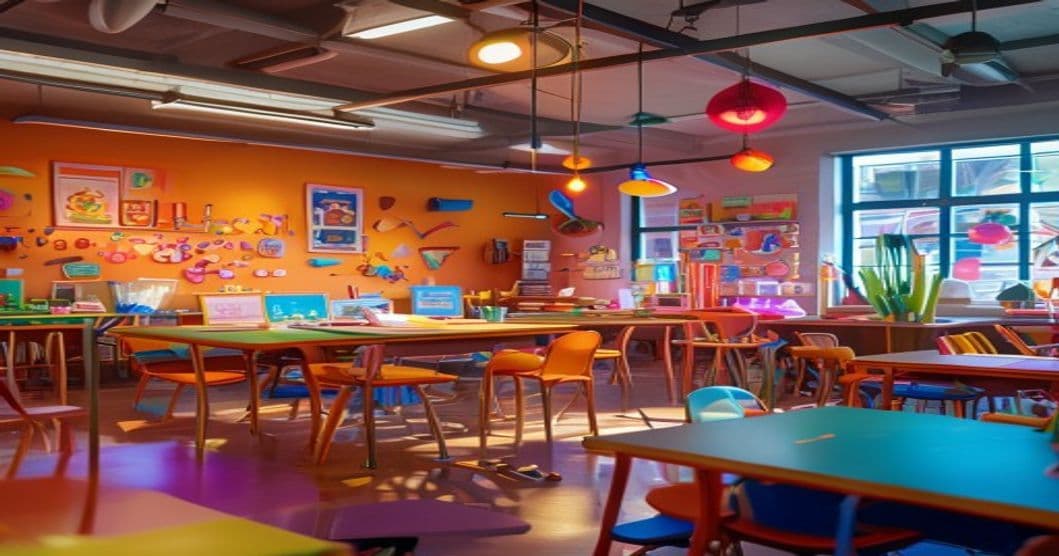
Unveiling the Health Benefits of STEAM Education
Imagine a classroom where creativity blends seamlessly with logic, resulting in not just smarter students, but healthier ones. This is the promise of STEAM education—a dynamic approach revolutionizing both learning and well-being.
What You'll Learn
In this article, you'll [discover] how STEAM education, an interdisciplinary approach integrating Science, Technology, Engineering, Arts, and Mathematics, impacts student health and fosters a holistic learning environment. We'll explore the mental health benefits, cognitive development, and the role of creativity in enhancing educational outcomes.
The Science Behind STEAM
STEAM education is more than a buzzword; it's a scientifically backed method that encourages holistic development. A report by the National Science Foundation highlights that students engaged in STEAM projects show improved problem-solving skills, increased motivation, and better collaboration abilities. The integration of arts into traditional STEM subjects has shown to enhance neural connections, facilitating both critical thinking and emotional intelligence.
How Arts Influence Cognitive Health
Incorporating arts in education isn't just about nurturing creativity. Studies by the American Psychological Association reveal that students who participate in art-related activities experience lower stress levels and improved mental health. This is due to the arts' ability to facilitate emotional expression and understanding, crucial components of psychological well-being.
Mental Health Benefits of STEAM Learning
The benefits of STEAM education extend beyond academics; they profoundly impact students' mental health. According to a study published in the Journal of Educational Psychology, students involved in STEAM education report 30% lower anxiety levels compared to their peers in traditional education settings. This reduction in stress is attributed to the engaging and interactive nature of STEAM projects.
Encouraging Mindfulness Through Innovation
STEAM projects often require a level of focus and presence akin to mindfulness practices. By engaging in hands-on activities, students can enter a 'flow state', a psychological condition where one is fully immersed and enjoying the process of creation. This state is known to reduce stress and enhance mental clarity.
Cognitive Development and STEAM
Cognitive development is a critical aspect of education, and STEAM plays a pivotal role. A study from the University of California, Berkeley found that students in STEAM programs scored 20% higher on cognitive flexibility tests than those in traditional programs. This flexibility is crucial for adapting to new situations and solving complex problems.
The Role of Creativity in Education
Creativity is often seen as innate, but STEAM education proves otherwise. By integrating arts with technology and science, students learn to think outside the box, fostering innovative thinking and problem-solving skills. This creative approach not only enhances learning but also prepares students for real-world challenges.
Key Takeaways
- STEAM education promotes mental health by reducing anxiety and stress levels.
- Cognitive development is enhanced through interdisciplinary learning.
- Art integration in STEAM fosters emotional intelligence and creativity.
- Mindfulness is encouraged through engaging, hands-on activities.
Pro Tips
- Incorporate Diverse Subjects: Blend arts with sciences to enhance both cognitive and emotional skills.
- Focus on Engagement: Use interactive projects to maintain student interest and reduce stress.
- Emphasize Real-World Applications: Connect lessons to real-life scenarios to improve understanding and retention.
Frequently Asked Questions
Q: What is STEAM education?
A: STEAM education integrates Science, Technology, Engineering, Arts, and Mathematics to foster holistic learning and development.
Q: How does STEAM education benefit mental health?
A: It reduces stress and anxiety by engaging students in interactive and creative learning activities.
Q: Why include arts in STEM?
A: Arts enhance creativity and emotional intelligence, crucial for cognitive health and problem-solving.
Q: How does STEAM education prepare students for the future?
A: By developing critical thinking, innovation, and adaptability, essential skills for future careers.
Conclusion
STEAM education is not just reshaping the academic landscape but also nurturing healthier, well-rounded individuals. As you consider educational paths, ponder this: could integrating creativity with logic be the key to a healthier, more innovative generation? Embrace STEAM, and watch the transformation unfold.