Health
Alex de Minaur's Health Blueprint for Peak Performance
How Alex de Minaur's legendary fitness, injury recovery, and training methods reveal the blueprint for athletic longevity and peak performance in tennis.
AAlex Morgan
10m
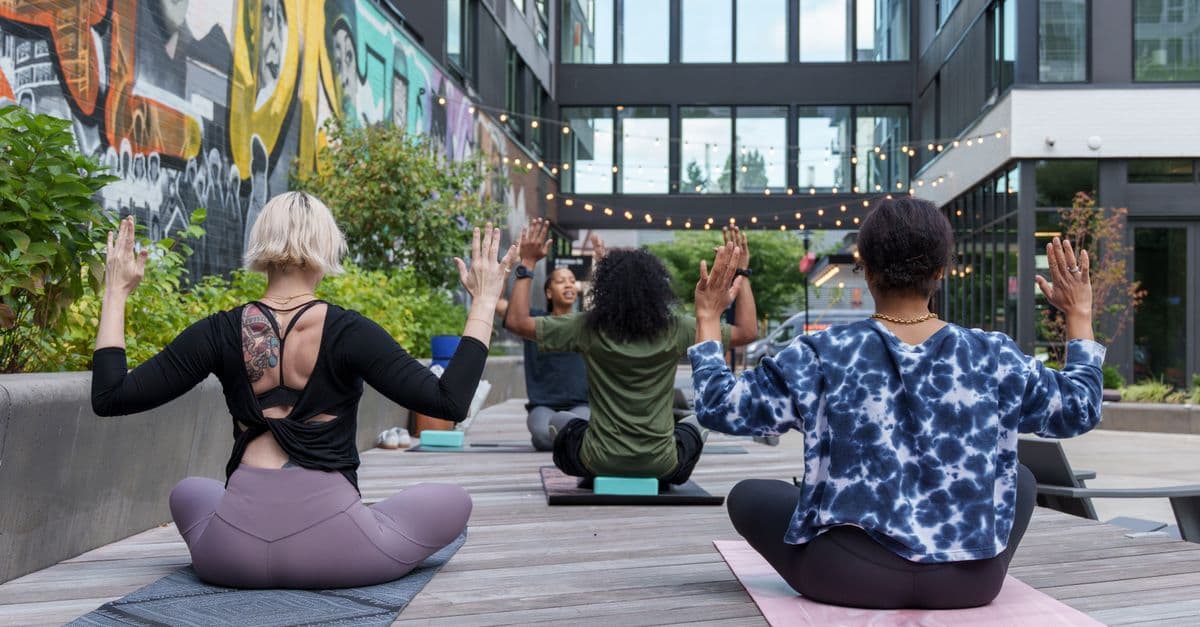
When you commit to exercise with a trusted group, your brain chemistry shifts in ways that make you 65% more likely to sustain that commitment for the long haul. Your social circle isn't just nice company—it's the biochemical difference between a New Year's resolution that fizzles by February and a transformation that lasts.
This comprehensive guide explores how your social fitness circle transforms health outcomes through the science of accountability, community engagement, and shared physical activity. You'll learn why working out within a supportive network produces dramatically different results than solo training, discover evidence-based strategies to build or join the best the circle for your goals, and understand how digital platforms are revolutionizing group fitness adherence. Whether you're looking to optimize your current workout routine or searching for sustainable motivation, understanding the power of your fitness circle is essential.
The connection between your social circle and physical health isn't metaphorical—it's measurable and profound. Studies show that people who are socially isolated and lonely have a higher chance of having high blood pressure and heart disease, making social connections a legitimate health intervention, not just a lifestyle preference.
When you exercise within a social context, multiple biological systems respond differently than they would during solitary workouts. Social connections influence physical health through our stress physiology, with the body's response to stress involving activity of the nervous, endocrine, and cardiovascular systems and characterized by elevated heart rate, blood pressure, and increased levels of the hormone cortisol. Your circle acts as a buffer against these stress responses.
The financial impact of insufficient physical activity underscores why finding sustainable exercise solutions matters. Insufficient physical activities cost $117 billion in healthcare every year, highlighting how personal fitness choices carry broader societal implications. Building a fitness circle isn't just about personal gains—it's a public health strategy.
Individuals who utilize external accountability systems, like a social fitness app, are 65% more likely to achieve their long-term health goals compared to those working solo. This statistic reveals why best the circle approaches consistently outperform individual efforts. The mechanism involves multiple psychological triggers working simultaneously.
Accountability emerges as the primary driver. When you know someone expects to see you at morning yoga or will notice your absence from the group run, you override internal resistance. By making your progress visible to a trusted circle, you tap into the psychological principle that we are naturally more driven to meet the expectations of others than ourselves.
The phenomenon extends beyond simple peer pressure. Long-term use of fitness app will improve people's physical, emotional, social, and cognitive status and promote their wellbeing, demonstrating that sustained engagement with your fitness circle produces comprehensive health improvements across multiple dimensions.
Not all fitness circles produce equal results. The composition, structure, and dynamics of your group dramatically influence adherence and outcomes. Understanding how to identify or create the optimal circle for your specific needs separates temporary enthusiasm from lasting transformation.
Group size matters more than you'd think. Research on community-based exercise programs reveals specific patterns. The programmes identified in this review had average adherence rates of 69.1% (SD 14.6), and the mean adherence rate of studies with comparable measures was 69.1% SD 14.6. This nearly 70% long-term adherence represents a substantial improvement over solo exercise attempts, where dropout rates within six months can reach 50%.
The type of social support within your circle determines its effectiveness. Support specific to exercise was a better predictor of exercise adherence than general social support, meaning your fitness circle should consist of people genuinely invested in physical activity, not just friends who happen to work out occasionally.
Diversity in skill levels prevents intimidation while promoting growth. When beginners work alongside intermediates and advanced members, everyone benefits from different perspectives. A high intensity functional training (HIFT) intervention with exceptionally high adherence (96.7%) involved 30 participants (57% women, age 36.7 ± 4.5 years), demonstrating that intentionally designed programs with community elements can achieve remarkable participation rates.
Structured programming provides framework without rigidity. Your circle needs enough organization to ensure consistency but sufficient flexibility to accommodate individual circumstances. Six key themes were identified from the qualitative studies as important for adherence to group exercise programmes: social connectedness, participant perceived benefits, programme design, empowering/energising effects, instructor and individual behaviour, and programme design was a common feature across all studies.
Regular communication extends beyond workout sessions. The best the circle maintains connection between activities through messaging, shared goals, and mutual encouragement. In 2026, over 70% of successful fitness transformations are linked to high levels of social connectivity within an app, revealing how digital tools amplify traditional group dynamics.
Technology has fundamentally altered how fitness circles form, function, and sustain engagement. Modern platforms transform smartphones into community hubs where encouragement and shared milestones drive continued participation.
Fitness apps can promote users' exercise and fitness behaviors based on big data technology by motion trajectory tracking, goal setting, feedback, reward, social connection and remote guidance. These features replicate and enhance what in-person groups provide, while adding capabilities impossible in physical-only settings.
The social features within fitness apps create specific pathways to improved wellbeing. The questionnaire survey of 1,452 fitness app users over 18 years old shows that: (1) fitness app use is associated with users' well-being; (2) upward social comparison plays a mediating role in the relationship between fitness app use and users' well-being; (3) self-control has a moderating effect on the relationship between fitness app use and users' well-being.
However, digital circles require awareness of psychological dynamics. People are more inclined to know themselves by comparing themselves with those perceived to be better in their circles, a process called upward social comparison. While this can motivate, excessive comparison may undermine confidence if not balanced with self-compassion.
When evaluating apps to support your fitness circle, prioritize platforms emphasizing genuine community features over superficial metrics. Look for:
Social features such as workout sharing, leaderboards, and group challenges help users stay accountable to their fitness goals by fostering engagement, motivation, and support from peers. These elements transform passive tracking into active community participation.
Your fitness circle's impact extends far beyond muscle strength and cardiovascular capacity. The mental health benefits of exercising within a supportive community represent some of the most compelling reasons to prioritize group-based activity.
Group exercise is associated with fewer depressive symptoms, reduced anxiety, higher life satisfaction, and improved self-esteem, with the social support and sense of belonging that develop through shared activity appearing to drive these benefits. This psychological transformation occurs through multiple mechanisms.
Reduced perceived exertion makes challenging workouts feel manageable. Engaging in conversation, laughing with friends, or focusing on the shared experience can distract individuals from the physical discomfort associated with intense workouts, and this reduction in perceived exertion can significantly improve adherence rates by making exercise more appealing and less intimidating.
The emotional support within your circle creates resilience against life's broader challenges. A social circle may also help people talk through their problems or offer help, no matter the situation, meaning your fitness network often evolves into a comprehensive support system addressing multiple life domains.
The ultimate measure of your fitness circle's success isn't intensity or duration of individual workouts—it's whether you're still exercising consistently months and years later. Sustainability requires intentional design and maintenance.
Support currently received from family and friends and exercise staff at Month 6 was found to be the strongest predictor of adherence during Months 7 to 12, indicating that the quality of support evolves over time. Your circle needs systems for maintaining engagement as initial enthusiasm naturally moderates.
Habit formation accelerates within group contexts. When exercise becomes socially embedded—when showing up means seeing friends, contributing to shared goals, and participating in a valued community—it transitions from willpower-dependent behavior to automatic routine.
Community engagement has helped facilitate participant adherence, which is particularly applicable for group exercise programs, and developing a sense of community (SOC) helps participants feel that they belong and provides ongoing social support. This sense of belonging becomes the foundation for lasting behavioral change.
Diversify your circle's skill levels intentionally by recruiting members across the fitness spectrum—beginners provide fresh perspective and motivation, while advanced members model consistency and offer technical guidance, creating a self-sustaining ecosystem of mutual support.
Schedule non-workout social connections with your circle monthly, such as post-workout coffee or weekend hiking, to deepen relationships beyond exercise and increase emotional investment in group continuity, which research shows predicts long-term adherence better than workout attendance alone.
Implement structured check-in protocols where circle members share weekly progress and challenges via group messaging, creating accountability touchpoints between sessions—consistency in communication matters more than workout intensity for maintaining engagement through inevitable motivation dips.
Q: How do I find the best the circle for my fitness level if I'm just starting out?
A: Begin with beginner-friendly group fitness classes at local gyms, community centers, or parks where instructors actively foster inclusive environments. Arrive early to introduce yourself, communicate your fitness level honestly, and commit to attending at least 4-6 sessions before evaluating fit—initial awkwardness is normal and typically resolves as you become familiar with routines and faces.
Q: Can online fitness circles provide the same health benefits as in-person groups?
A: Digital fitness circles offer substantial benefits including 65% improved goal achievement rates when using social accountability features, though they work best when combined with occasional in-person meetups. The key is choosing platforms with robust communication tools, shared challenges, and genuine community interaction rather than passive content consumption.
Q: What if my current fitness circle isn't improving my adherence?
A: Evaluate whether your group provides exercise-specific support (the strongest predictor of adherence) versus general socializing. If social connections exist but fitness accountability is lacking, introduce structured elements like shared goals, regular progress updates, or friendly challenges. If the fundamental dynamic doesn't support your health objectives after 2-3 months, seeking a different circle isn't failure—it's strategic optimization.
Q: How large should my fitness circle be for optimal results?
A: Research on high-adherence programs suggests 20-30 active participants creates ideal dynamics, large enough for diverse perspectives and consistent attendance despite individual schedules, yet small enough for genuine relationships. However, even micro-circles of 3-5 committed individuals can produce excellent results if structure and communication remain consistent.
The evidence is unambiguous: your fitness circle represents one of the most powerful health interventions available. With 65% improved success rates, nearly 70% long-term adherence, and comprehensive benefits spanning physical, mental, and emotional wellbeing, cultivating the right social fitness network isn't optional—it's essential.
The best the circle for your health already exists somewhere, waiting for you to find it or create it. Whether through local group classes, digital platforms, or informal friend networks, your next step is simple: identify one person who shares your health goals and schedule your first workout together this week. That single action initiates a cascade of biological, psychological, and social changes that compound over time.
What kind of circle will you build, and who will you invite to transform alongside you?
Related Free Tool
BMI Calculator
Calculate your Body Mass Index with metric or imperial units.
Get the latest AI-powered insights delivered to your inbox every week. No spam, ever.
Unsubscribe anytime. We respect your privacy.
Written by
Marcus ReidHealth & Science
Health and science writer dedicated to translating complex medical and scientific research into accessible, actionable insights.
Loading comments...

Read Next
LifestyleThe median American read just two books in 2025, while 40% didn't read a single one. Here's how to build a reading habit that actually lasts using science.
How Alex de Minaur's legendary fitness, injury recovery, and training methods reveal the blueprint for athletic longevity and peak performance in tennis.

Discover the science-backed health strategies and recovery protocols that transformed Julián Álvarez into a world-class athlete, and apply these principles to your wellness.
Playing an entire season with a fractured finger reveals the brutal health toll of elite catching. Discover injury prevention strategies from William Contreras' career.