
Business
Tom Dundon: From Subprime Lending to Sports Empire
From subprime lending to sports empire: How Tom Dundon built a $2.3B fortune through ruthless efficiency, data-driven decisions, and controversial cost-cutting.
SSarah Chen
14m1
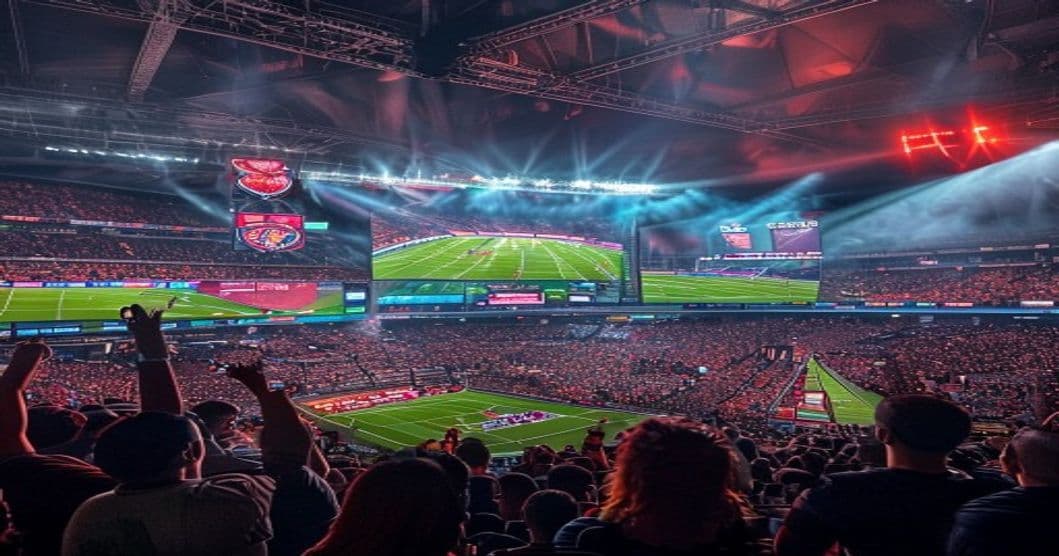
The NFL isn't just programming games—it's orchestrating a revenue phenomenon approaching $25 billion annually. The league had roughly $23 billion in revenue in the fiscal year that ended last March and should approach $25 billion by the end of the current fiscal year, making understanding this week's NFL schedule less about sports and more about tracking one of America's most sophisticated business operations.
This article examines the NFL schedule this week through a business lens, exploring how game programming drives multi-billion dollar revenue streams across media rights, sports betting, advertising, and local economies. You'll discover the economic infrastructure behind each scheduled matchup, learn how schedule timing impacts corporate earnings, understand the betting economy transformation, and gain [strategic] insights into leveraging NFL programming cycles for business advantage.
When you review the best NFL schedule this week, you're looking at the output of an algorithmic masterpiece. It takes thousands of computers and a team of NFL executives to create the NFL's 272-game masterpiece. But the real genius isn't in the technology—it's in the revenue optimization.
Media rights dominate, contributing 61% of total revenue ($14 billion in 2024). Each scheduled game represents a carefully calibrated asset in a portfolio that includes CBS ($1.85 billion annually), Fox ($2 billion), NBC ($1.7 billion), Disney ($2.55 billion for Monday Night Football), Amazon ($1.3 billion for Thursday Night Football), and YouTube ($2 billion for Sunday Ticket). Networks don't just broadcast games—they monetize them aggressively, reaping an estimated $5 billion to $6 billion annually from advertising in and around NFL games.
The NFL schedule this week guide shows strategic time slot placement that maximizes viewership and advertiser competition. Prime-time games command premium advertising rates, with 30-second spots running between $400,000 and $500,000 for regular Monday Night Football broadcasts. This scheduling precision ensures that every kickoff time serves dual purposes: competitive fairness and revenue maximization.
The full 2026 international games schedule was released on May 13, featuring a record-breaking nine games played across four continents, seven countries and eight stadiums, with Melbourne, Rio de Janeiro, London, Paris, Madrid, Munich and Mexico City all hosting international games. Each international game expands broadcasting territories and creates new sponsorship markets, extending the NFL's revenue reach beyond domestic boundaries.
The transformation from sports league to betting platform partner represents one of modern business's most dramatic pivots. The American Gaming Association estimates that in the 2025 NFL season, Americans will wager about $30 billion legally. This isn't ancillary revenue—it's core business strategy.
Reports show the NFL makes about $132 million per year from gambling-related sponsorships, but the financial relationship runs deeper. The league licenses data feeds, sells official partnerships, and benefits from increased viewership driven by betting engagement. The NFL's annual revenue may increase by $2.3 billion a year due to widely available, legal, regulated sports betting, according to American Gaming Association research.
For businesses monitoring this week's schedule, each game represents multiple betting markets: point spreads, over/unders, player props, and increasingly exotic wagers. More than $47 million has been staked this season in so-called "mention market" on prediction market Kalshi, where bettors wager on which phrases announcers will say during games.
The betting economy doesn't just create revenue—it fundamentally changes how games are consumed. Sportsbooks treat September as critical acquisition time, with industrywide more advertising in the month of September than in any other month outside of the Super Bowl. Every scheduled game becomes an advertising opportunity for betting operators fighting for market share.
When analyzing the NFL schedule this week, consider the localized economic engines each game activates. The numbers reveal staggering community-level impact.
The Pittsburgh Steelers contributed $3.4 billion in economic output in Allegheny County and supported approximately 3,000 permanent jobs over the past four years. Levi's Stadium in San Francisco is estimated to have contributed more than $2 billion to Santa Clara's local economy from 2014 through 2023. These aren't one-time events—they're recurring revenue cycles triggered by each scheduled home game.
The ripple effects extend across multiple sectors. Cities with NFL teams often experience increased tourism and economic activity throughout the football season, with every home game drawing fans from other cities, filling hotels and restaurants, and spurring local commerce. For commercial real estate investors and small business owners, the most important metric is the 15% boost in business formation near new NFL stadiums within the first five years.
Annually, the NFL contributes around $5 billion to the U.S. economy—a figure that makes each week's schedule a significant macroeconomic event affecting employment, tax revenue, and business investment across dozens of metropolitan areas.
The NFL schedule this week represents the television industry's most valuable programming inventory. Understanding why requires examining the advertising economics.
Football broadcasts consistently deliver what advertisers desperately need: massive, live audiences that can't skip commercials. The kickoff of the 2024 NFL season attracted nearly 29 million viewers for the Baltimore Ravens vs. Kansas City Chiefs game. Compare that to the average NBA game drawing 1.6 million viewers, while MLB averages 1.3 million.
This viewership concentration creates pricing power. Networks leverage NFL schedules to sell advertising across categories experiencing explosive growth. Networks are reporting more substantial business from the fast food, retail, insurance, sports betting, and tech categories. For Disney's ESPN alone, the company is poised to reap an estimated $585 million advertising windfall from ESPN's 2023 NFL coverage, with a 17% increase in ad sales for Monday Night Football.
The schedule's structure—Thursday night games, Sunday afternoon doubleheaders, Sunday night showcases, and Monday night closers—creates differentiated advertising products that networks package and price individually, maximizing revenue extraction from each broadcast window.
Savvy business leaders use the NFL schedule as both an economic indicator and strategic tool. Retail operations time promotions around game schedules. Restaurants staff differently on game days. Digital platforms anticipate traffic patterns tied to kickoff times.
The schedule also reveals broader consumer behavior patterns. When major market teams play prime-time games, e-commerce companies observe decreased transaction volumes during those hours but spikes immediately before and after. Delivery services plan driver allocation around expected order surges coinciding with halftime.
For investors, the schedule provides timing intelligence. National revenue shared with teams jumped 7.5% last year, and teams expect a similar increase this year, which would put the national piece at about $15 billion. Companies with NFL partnerships time quarterly earnings around schedule visibility, knowing that strong viewership metrics drive stock performance.
Track schedule-driven quarterly cycles: Companies with NFL exposure (broadcasters, betting operators, advertisers) show predictable revenue spikes aligned with September-February scheduling. Use this for investment timing and competitive analysis.
Leverage game-day consumer behavior: Retail and service businesses should analyze transaction data against the specific NFL schedule this week—not just "game days" generically. Prime-time games in major markets create distinct spending patterns that differ from afternoon regional broadcasts.
Monitor international scheduling expansion: The 2026 season features a record-breaking nine international games, signaling market expansion strategies. Businesses considering international growth should examine how NFL international scheduling reveals consumer market sophistication in those regions.
Q: How does the NFL schedule impact advertising costs for businesses?
A: The schedule directly determines advertising inventory value. 30-second spots for Monday Night Football run between $400,000 and $500,000 during regular season games, with prime matchups commanding premiums. Businesses planning media buys should analyze specific matchup appeal—divisional rivalry games or playoff-implication contests cost significantly more than low-stakes matchups.
Q: What's the business case for cities hosting NFL teams based on schedule economics?
A: The economic justification is substantial. Levi's Stadium contributed more than $2 billion to Santa Clara's local economy from 2014 through 2023, while Pittsburgh's Steelers contributed $3.4 billion in economic output and supported approximately 3,000 permanent jobs over four years. Each scheduled home game triggers multiplier effects across hospitality, retail, and services sectors.
Q: How has sports betting changed the business value of NFL schedules?
A: The transformation is dramatic. The NFL's annual revenue may increase by $2.3 billion a year due to widely available, legal, regulated sports betting. Beyond direct revenue, betting engagement increases viewership, which drives higher media rights values and advertising rates, creating compounding economic effects from each scheduled game.
Q: What makes the NFL schedule more valuable than other sports programming?
A: Scale and scarcity create unique value. NFL season kickoff attracted nearly 29 million viewers compared to average NBA games drawing 1.6 million viewers and MLB averaging 1.3 million. With only 272 games annually versus thousands in other sports, each scheduled NFL game represents scarce, premium inventory that commands disproportionate business value.
The NFL schedule this week isn't entertainment programming—it's a financial instrument generating measurable economic impact across multiple industries. With the league approaching $25 billion in revenue by the end of the current fiscal year, understanding how scheduled games drive media rights, betting markets, advertising revenue, and local economies provides crucial business intelligence.
For executives, investors, and entrepreneurs, the question isn't whether to track the NFL schedule—it's how to leverage its predictable revenue cycles for competitive advantage. Are you analyzing this week's schedule as the multi-billion dollar business event it represents, or simply watching games unfold?
Related Free Tool
Compound Interest Calculator
See how your investment grows with the power of compounding.
Get our latest insights delivered to your inbox every week. No spam, ever.
Unsubscribe anytime. We respect your privacy.
Written by
Alex MorganAI & Technology
AI and technology writer covering the latest breakthroughs in artificial intelligence, machine learning, and software development.
Loading comments...

Read Next
FinanceThe S&P 500 surged 28% year-over-year to 7,580 points. Discover which sectors offer opportunity, how to navigate volatility, and where smart money is flowing.
From subprime lending to sports empire: How Tom Dundon built a $2.3B fortune through ruthless efficiency, data-driven decisions, and controversial cost-cutting.

San Jose businesses face a $50M budget gap impacting fire services. Learn how fire code compliance protects your bottom line and creates competitive advantage.

How the San Diego Padres built a $3.9 billion enterprise through revenue diversification, strategic partnerships, and economic impact engineering.