
Health
When Fortnite Goes Down: The Hidden Health Impact
Fortnite server downtime once lasted 19 hours—but for some players, the real health crisis wasn't the outage. It was realizing they couldn't function without it.
MMarcus Reid
12m
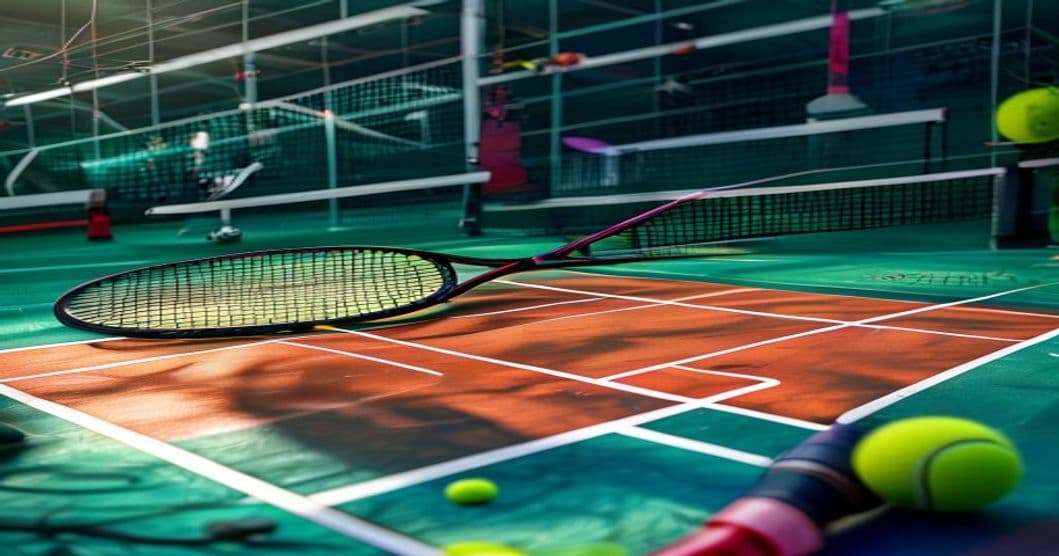
At just 24 years old, Juan Manuel Cerúndolo achieved a career-high ATP singles ranking of world No. 54 in May 2026—but the real story isn't just about rankings. It's about how this Argentine left-hander transformed his body into a biomechanical masterpiece, turning scientific principles into on-court dominance. Behind every powerful forehand and strategic clay-court rally lies a complex interplay of physiology, biomechanics, and recovery [science] that you can learn from.
In this comprehensive juan manuel cerundolo guide, you'll discover the health and science principles that power professional [tennis] performance. Whether you're seeking the best juan manuel cerundolo insights for your own athletic development or simply fascinated by sports science, we'll explore how Juan, Manuel, and every elite player like Cerundolo optimize their bodies for peak performance while minimizing injury risk.
Biomechanical analysis plays a critical role in enhancing performance, preventing injuries, and informing tailored training programs for tennis athletes. Juan Manuel Cerúndolo's forehand stands out as his signature weapon, capable of causing problems with its heavy spin and high bounce—a testament to refined biomechanical efficiency developed through years of systematic training.
Biomechanics is a key area in player development because all strokes have a fundamental mechanical structure and sports injuries primarily have a mechanical cause. For Cerúndolo, this translates into specific movement patterns that maximize power generation while protecting vulnerable joints. The primary goals of the sport biomechanist are to improve athletic performance and to reduce the risk of injury, objectives that align perfectly with professional tennis demands.
As a left-hander, Cerúndolo naturally looked up to Rafael Nadal, and it is no surprise that Roland Garros is his favourite tournament. This preference isn't merely sentimental—clay courts reward specific biomechanical advantages. Cerúndolo excels on clay courts, where his ability to generate topspin and construct points patiently gives him a distinct advantage.
High-speed cameras, motion capture systems, and wearable sensors provide precise and detailed data on player movements, enabling the accurate measurement of joint angles, velocities, and forces. Modern tennis training employs these technologies to optimize every aspect of stroke production, from the legs through the core to the racket—what biomechanists call the kinetic chain.
Key areas of biomechanical analysis in tennis include groundstrokes (forehand and backhand), with efficient energy transfer from the legs through the core to the racket. For you as an athlete or coach, understanding this principle means recognizing that power doesn't originate in the arm—it begins with proper footwork and hip rotation.
Juan Manuel Cerúndolo was born on 15 November 2001 and is an Argentine professional tennis player who has demonstrated remarkable physical development throughout his career. He began playing tennis as a 3-year-old at his parents' academy, with a racquet in his hand since age three—early neuromuscular development that provided a foundation for elite performance.
In 2026, Juan Manuel Cerúndolo achieved 62.5% wins, hitting 57.9% on first serves, demonstrating consistency in high-pressure situations. He averages 3.81 aces per match and maintains a double fault ratio of 2.16—metrics that reveal both offensive capability and technical control.
Performance profiling for the modern tennis player tracks metrics like VO2max (≈55–65 ml·kg−1·min−1), peak sprint speed (up to 7 m/s), and serve velocities often exceeding 200 km/h. These physiological benchmarks separate elite from recreational players, representing years of systematic conditioning.
| Performance Metric | Elite Range | Cerúndolo's Achievement |
|---|---|---|
| ATP Ranking | Top 100 | World No. 54 (2026) |
| First Serve % | 55-65% | 57.9% |
| Aces per Match | 3-5 | 3.81 |
| Win Rate (2026) | 50-70% | 62.5% |
In 2022, Cerúndolo did not play in any ATP tournaments on clay due to leg and hip injuries, dropping out of the top 130 to No. 132, also skipping the entire grass season including Wimbledon and the North American tournaments including the US Open. This setback illustrates a critical reality: even elite athletes face injury challenges that require scientific recovery approaches.
Just under half of player's injuries are lower limb (40%), upper limb injuries (25%), with the remaining injuries to the trunk/back and abdomen (20%) and thigh, hip, head, eye (15%). These statistics underscore why comprehensive injury prevention programs focus on whole-body conditioning rather than isolated muscle groups.
Proper biomechanics play a vital role in preventing common tennis injuries, with correct serve mechanics reducing strain on the shoulder joint by ensuring a smooth kinetic chain. For Cerúndolo's comeback from injury, this meant rebuilding movement patterns from the ground up.
The key to prevention and treatment of tennis injuries is good coaching and a formal stretching and strengthening program. Recovery isn't passive rest—it's active preparation for future performance demands.
Research shows that 80% of competitive tennis players adopted multiple post-exercise recovery strategies, primarily foam rolling, cold-water immersion, hot-water immersion, and the intake of protein shakes. These evidence-based approaches accelerate tissue repair and reduce inflammation.
Nutritional support, adequate hydration, sufficient sleep, and proper equipment selection are integral components of injury prevention and recovery. Elite athletes like Cerúndolo optimize every variable—from macronutrient timing to sleep hygiene—to maintain competitive edge.
Working with the right volume and intensity combined with adequate recovery (at least one day off a week from any physical training) combined with following a specific injury prevention program gives players every opportunity to improve and minimize the risk of tennis training injuries. This principle of periodized rest applies equally to professionals and recreational players.
Cerúndolo made his ATP main draw debut at the 2021 Córdoba Open where, as a qualifier, he won the title—the world No. 335 was the fifth lowest ranked player to win an ATP Tour title since 1990. This historic achievement demonstrates the psychological component of athletic performance: belief in capability despite statistical improbability.
When Cerúndolo started playing pro, he changed his mentality, realizing that because he was top 10 in juniors didn't mean he could win every Future easily—it was tough, with every guy grinding and hitting a lot of balls, which is when he started training more and acting like a professional. This maturation process reflects the cognitive development necessary for sustained elite performance.
Cerúndolo's commitment to improving his game and his mental toughness are crucial factors in his journey, including managing his physical conditioning, optimizing his training regimen, and developing a strong mental game. Sports psychology research confirms that mental skills training—visualization, self-talk, arousal regulation—significantly impacts competitive outcomes.
Earlier in May 2026, the Argentine lifted an ATP Challenger title in Bordeaux, beating four Top-100 opponents on his way to the trophy, demonstrating competitive resilience after previous setbacks. Each victory builds neural pathways associated with success, reinforcing positive performance states.
Cerúndolo's father, Alejandro, played professionally in the 1980s; his mother, Maria Luz, was also a tennis coach; his older brother, Francisco, also plays on ATP Tour; and his sister, Maria Constanza, played for the Argentine field hockey team that won gold medal at 2018 Youth Olympic Games. This athletic family environment provided early exposure to high-performance culture and systematic training principles.
Tennis player training now integrates biomechanics, physiology and data analytics to refine stroke mechanics and recovery; sports science reduces injury risk while delivering measurable performance gains. Modern training periodization balances technical development, physical conditioning, competitive exposure, and recovery in carefully calculated ratios.
Key areas for development include managing physical conditioning, optimizing training regimen, and developing a strong mental game. For you seeking performance improvements, this tripartite approach—physical, technical, and psychological—offers the most comprehensive path forward.
Your training should incorporate:
Implement biomechanical video analysis: Record your strokes from multiple angles monthly to identify technical inefficiencies before they become injury patterns. Focus on kinetic chain sequencing—legs initiate, hips rotate, trunk transfers, arm delivers. Even smartphone slow-motion analysis reveals compensatory movements that waste energy and stress joints.
Periodize recovery as rigorously as training: Match recovery intensity to training load using a structured protocol: high-intensity training days require cold-water immersion (10-15 minutes at 10-15°C) within 30 minutes post-session, protein intake (20-25g) within 90 minutes, and 8+ hours sleep. Lower-intensity days need active recovery (light cycling, swimming) plus mobility work. Track subjective recovery scores daily to prevent overtraining.
Develop surface-specific conditioning: If clay is your preferred surface like Cerúndolo, emphasize longer rallies in practice (15+ shots), lateral movement patterns with direction changes, and eccentric hamstring/quadriceps strength to handle sliding mechanics. Hard court players need more explosive power and rapid deceleration capacity. Train the energy systems and movement patterns specific to your competitive environment for maximum transfer.
Q: How did Juan Manuel Cerúndolo achieve his career-high ranking despite previous injuries?
A: Cerúndolo's ranking recovery demonstrates systematic rehabilitation principles. After his 2022 leg and hip injuries sidelined him for months, he rebuilt through progressive loading—starting with Challenger tournaments to regain match fitness without the pressure of ATP-level competition. His May 2026 ranking of world No. 54 resulted from consistent training volume management, evidence-based recovery protocols, and gradual competitive exposure. The key lesson: injury comeback requires patience, professional guidance, and respecting tissue healing timelines rather than rushing back to previous training loads.
Q: What biomechanical advantages do left-handed tennis players like Cerúndolo have?
A: Left-handed players benefit from several competitive advantages. Statistically, only 10-15% of professional players are left-handed, meaning opponents face unfamiliar ball spins and court angles less frequently. Cerúndolo's left-handed forehand to an opponent's backhand (typically weaker side) creates tactical pressure, especially on clay where heavy topspin amplifies the effect. Biomechanically, the serve's natural slice spin from left-handers moves differently, requiring opponents to adjust positioning and timing. However, these advantages require deliberate exploitation through strategic shot selection and court positioning.
Q: What specific recovery techniques help tennis players prevent overuse injuries?
A: Evidence-based recovery strategies include: (1) Cold-water immersion (10-15°C for 10-15 minutes) within 30 minutes post-training to reduce inflammation and muscle soreness; (2) Foam rolling targeting major muscle groups (quadriceps, hamstrings, calves) for 60-90 seconds each to maintain tissue quality; (3) Adequate protein intake (1.6-2.2g per kg bodyweight daily) distributed across meals to support muscle repair; (4) Minimum one complete rest day weekly from physical training; (5) Sleep optimization (8-10 hours for athletes) as primary recovery tool. Research shows combining multiple modalities produces superior results compared to single interventions.
Q: How can amateur players apply professional training principles to improve performance?
A: Start with performance testing to identify specific weaknesses—movement speed, power output, endurance capacity, and flexibility limitations. Then implement: (1) Structured warm-ups including dynamic stretching and tennis-specific movement patterns before every session; (2) Strength training 2-3 times weekly focusing on compound movements (squats, deadlifts, rows, presses) that build foundational power; (3) Technical video analysis monthly to catch biomechanical flaws early; (4) Periodized training with planned rest weeks every 3-4 weeks to prevent overtraining; (5) Nutrition and hydration protocols matching training intensity. The key difference between amateur and professional isn't talent alone—it's systematic application of sports science principles.
Juan Manuel Cerúndolo's journey from a world No. 335 qualifier winning his ATP debut to achieving a career-high ranking of world No. 54 exemplifies how sports science principles transform athletic potential into competitive reality. His story reveals that elite performance isn't mystical talent—it's the systematic application of biomechanics, physiological conditioning, injury prevention protocols, and mental resilience.
You now understand the scientific foundations powering professional tennis: how kinetic chain efficiency generates powerful groundstrokes, why injury prevention requires comprehensive conditioning rather than isolated exercises, what recovery protocols accelerate tissue repair, and how mental development parallels physical progression. These aren't abstract concepts—they're actionable principles you can implement immediately.
Whether you're an aspiring competitor, recreational player, coach, or sports science enthusiast, the question becomes: How will you apply these evidence-based training principles to unlock your own athletic potential? Start with one element—biomechanical video analysis, structured recovery protocols, or systematic strength training—and build from there. The path from current capability to peak performance is paved with consistent, scientifically-informed decisions. Your move.
Related Free Tool
BMI Calculator
Calculate your Body Mass Index with metric or imperial units.
Get our latest insights delivered to your inbox every week. No spam, ever.
Unsubscribe anytime. We respect your privacy.
Written by
Sarah ChenBusiness & Finance
Business and finance analyst with deep expertise in market trends, investment strategies, and economic developments.
Loading comments...

Read Next
HealthDiscover how to identify science-backed wellness products in GMA Deals and Steals, decode health claims, and maximize value through evidence-based shopping strategies.
Fortnite server downtime once lasted 19 hours—but for some players, the real health crisis wasn't the outage. It was realizing they couldn't function without it.

88% of gamers experience emotional benefits, but extended Rockstar game sessions carry hidden health risks. Learn to play smarter while protecting your wellbeing.
Millions of dust mites in your bed and 235,000 annual bathroom injuries reveal hidden health risks. Learn how to create safer spaces in the post-Bed Bath & Beyond era.